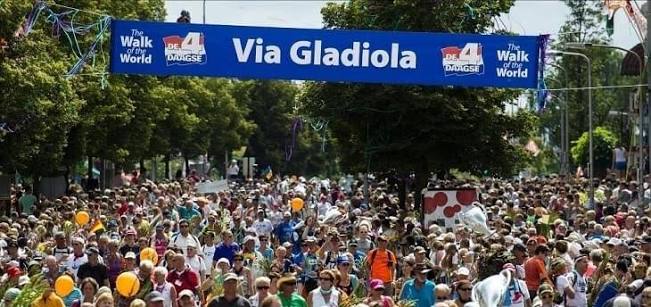
Discover why major walking events like the Nijmeegse Vierdaagse can change your life. Adventure, connection, and fulfillment are waiting for you!
 Patriek Paap
Step by step: why major walking events will still change you this year
The Nijmeegse Vierdaagse has started again, and something special is happening this year: for the first time in history, the percentage of young participants has risen to 20%. That's no coincidence. More and more people between twenty and forty are discovering that a major walking challenge offers exactly what life sometimes lacks — adventure, connection, and the feeling that you've truly accomplished something. Not convinced yet? Then keep reading.
🌍 The most beautiful major walking events in the Netherlands and Belgium
The Netherlands and Belgium are absolute top destinations when it comes to organised walking events. Whether you're a seasoned walker or someone who has never walked further than the supermarket, there's always an event that suits you.
🇳🇱 The Netherlands
- De Nijmeegse Vierdaagse – The most iconic walking event in the world. For four days, you walk distances of 30 to 50 kilometres per day through the beautiful Gelderland landscape. The atmosphere along the route is indescribable: supporters, music, and the famous finish at the Wedren on the last day.
- De Avond4daagse – Local versions of the Vierdaagse organised throughout the country. Perfect as a warm-up for the big event.
- De Batavierenrace (partly walking) – Combines running and walking in a relay format from Nijmegen to Enschede. Ideal for a group of friends.
🇧🇪 Belgium
- De Dodentocht – Held annually in August, starting from Bornem. Participants have 24 hours to cover 100 kilometres. Only half of them reach the finish line — and that's precisely what makes it so appealing.
- De Nacht van Vlaanderen – Night-time walks of 25 to 50 kilometres through the Flemish countryside. Romantic, mysterious, and challenging all at once.
- De Ardennen Wandelweek – For those who love hills, forests, and a wonderfully slow pace. Multi-day walks through one of the most beautiful regions in Europe.
Why these kinds of events are so incredibly fun
It all starts in your head. A walking event is first and foremost a mental challenge. You get to know your own limits — and push past them. The moment you have blisters, your legs feel heavy, and you still have twenty kilometres to go, you discover something about yourself that you can't learn anywhere else.
But it's not just about yourself. The social dimension of these events is perhaps the best part of all. Spontaneous friendships form along the route. You talk to people you would never otherwise meet. You laugh at shared suffering, share energy bars, and celebrate every checkpoint like a victory. Going solo? Absolutely possible — and honestly, you'll meet even more new people that way.
Then there's the nature. The Netherlands and Belgium are small, but they hide landscapes that take your breath away. Meadows, forests, rivers, and villages you would never notice from a car. Walking forces you to slow down and truly look.
And let's not forget the feeling of crossing the finish line. Whether you're walking up the Wedren in Nijmegen after four days with a crowd cheering you on, or crossing the finish line of the Dodentocht after 100 kilometers as the sun rises — that's a feeling you'll carry with you for years to come.
How do you best prepare yourself?
📅 Start on time. Got the Vierdaagse or the Dodentocht on your list? Then start training at least three to four months in advance. Work progressively: begin with shorter walks and slowly build up to longer distances.
👟 Invest in good footwear. This is really not the time to cut corners. Go to a specialist walking shop, have your feet measured and take the time to break in your shoes. Blisters are sometimes unavoidable, but with good footwear you can limit the damage enormously.
🎒 Pack smart, not heavy. A light backpack makes a world of difference. Only bring what you truly need: water, snacks, a rain jacket, plasters and sunscreen. The lighter you walk, the further you'll go in comfort.
- Train on terrain similar to the route – Walk on cobblestones, sandy paths and gentle hills if that's what the course involves.
- Practice with your gear – Wear your walking shoes and backpack during training sessions, not just on the day itself.
- Take care of your nutrition and hydration – Eat carbohydrate-rich meals in the days before the event and drink regularly while walking.
- Sleep well – Recovery starts with good sleep, especially in the run-up to a multi-day event.
- Walk with others – Training walks with friends keep you motivated and prepare you for the social aspect of the event itself.
Your adventure begins with the first step
✨ The rise in young participants at the Vierdaagse is no hype — it's a signal. People are looking for challenges that truly mean something. Something that engages your body, mind and social life all at once. Major walking events offer exactly that. Whether you're going for the Nijmeegse Vierdaagse, the Belgian Dodentocht or a local evening walk as your first step: just start. Put that first walk in your diary. The rest will follow naturally — one step at a time.
About the author Patriek Paap
Patriek woont en werkt in bruisend Amsterdam. Als DJ trad ze op in binnen- en buitenland en zag ze de opkomst en het mainstream worden van de moderne elektronische muziek. Ze kent de leukste uitgaansplekken, houdt van katten en staat bekend als een geboren organisatietalent.
Useful websites
Your website here
Visit website
Disclaimer
The information on this page is meant as general inspiration. We share links to third-party websites that may interest you, but we cannot guarantee that the content is always up-to-date, accurate or safe.
Comments (0)
Log in to comment